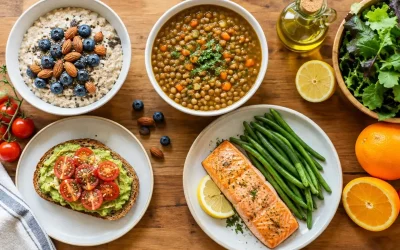

If you are wondering how to increase HDL cholesterol, start with the habits that improve your whole cholesterol profile: regular aerobic activity, avoiding smoking, replacing trans and saturated fats with unsaturated fats, and—if it is appropriate for you—gradual weight loss. These steps may raise HDL, but the bigger goal is not to chase a single “good cholesterol” number. It is to lower the cardiovascular risk that comes most clearly from LDL.
HDL and LDL do different jobs in your arteries
HDL, or high-density lipoprotein, carries excess cholesterol from the bloodstream and artery walls back to the liver. The liver breaks it down and removes it from the body. That cleanup role is why HDL is commonly called “good” cholesterol.
LDL, or low-density lipoprotein, does the opposite job in this comparison: it carries most of the body’s cholesterol and can deposit it in artery walls. Over time, that buildup forms plaque. High LDL is a direct cause of atherosclerosis and cardiovascular events; high LDL combined with low HDL raises the risk of heart attack and stroke.
| Measure | What it tells you | Why it matters |
|---|---|---|
| HDL cholesterol | Cholesterol transport back toward the liver | Higher levels are associated with lower risk, but a higher number alone is not a treatment goal. |
| LDL cholesterol | Cholesterol that can be deposited in artery walls | High LDL is a causal driver of cardiovascular disease. |
| Total cholesterol | A combined cholesterol measure | It adds context, but it does not replace looking at HDL and LDL separately. |
A useful distinction: HDL is associated with lower risk, but medicines that raised HDL did not reduce cardiovascular events in major trials. HDL function—how well it removes cholesterol—may matter more than its concentration. So a favorable HDL result does not erase a high LDL result.
Know the adult HDL, LDL, and total cholesterol ranges
For adults, an HDL level of 60 mg/dL or higher is considered optimal. HDL below 40 mg/dL is low for men, and below 50 mg/dL is low for women. A total cholesterol level below 200 mg/dL is desirable, while LDL below 100 mg/dL is considered optimal for people at moderate risk.
These are reference points, not a diagnosis. A lipid panel needs context: your other results, personal history, and family history can change what deserves attention. If you have to compare the two, a high LDL is the bigger concern, because LDL directly drives plaque formation.
More HDL is not automatically better. HDL at or above 80 mg/dL may not be protective, and a level above 100 mg/dL is considered extreme. If a result is unexpectedly low, high, or difficult to interpret, discuss it with a clinician rather than trying to correct it on your own.
How to increase HDL cholesterol with the habits that matter most
The most dependable approach is a pattern of activity, food choices, smoke-free living, and weight management when needed. None of these is a quick fix, and results vary from person to person. Aerobic exercise and quitting smoking have randomized trials showing HDL gains; better fat choices and weight loss also improve the broader cholesterol picture.
- Build toward regular aerobic activity. A meta-analysis of 25 randomized trials found an average net HDL increase of 2.53 mg/dL with aerobic exercise.
- Get enough minutes each week. About 120 minutes a week, or roughly 900 kcal of activity-related energy expenditure, was the minimum associated with a statistically detectable HDL rise in that analysis.
- Choose a sustainable food pattern. Replace trans and saturated fats with unsaturated fats rather than looking for one “HDL food.”
- Do not smoke, and limit secondhand smoke. Smoking lowers HDL, and quitting can improve it quickly.
- Focus on waist and weight if that is a health goal for you. Even modest sustained weight loss can improve both HDL and LDL numbers.
Exercise works best when you give it enough time
For HDL, duration appears to matter. In a recent meta-analysis, exercise sessions longer than 30 minutes produced a statistically significant HDL increase, while shorter sessions did not. In the earlier 25-trial analysis, every additional 10 minutes per session was associated with an approximately 1.4 mg/dL greater HDL increase.
A practical target is 150 minutes a week of moderate aerobic exercise, a level recommended for heart health. If that sounds far from your current routine, the 120-minute finding offers a concrete first milestone rather than an all-or-nothing test.
Resistance training can also improve HDL, although its mechanism is less clear. Combining resistance work with aerobic activity is a reasonable plan. What counts is regular activity over months, not a single hard session.
Food choices should improve the whole lipid picture
Replacing saturated and trans fats with unsaturated fats can help raise HDL. Avocado, olive oil, and nuts are examples of foods rich in unsaturated fats. Trans fats found in shortening, fried foods, and some margarines are especially unhelpful because they raise LDL and lower HDL at the same time.
Fiber belongs in the same bigger-picture approach. Oats, beans, and whole grains provide soluble fiber, which is recommended in the TLC dietary program to improve cholesterol profiles. Plant stanols and sterols are also included in that program.
Extra virgin olive oil is notable for more than a headline HDL number. In a 12-week study, it improved cholesterol efflux capacity and increased large HDL particles in older adults. A Mediterranean-style dietary pattern, particularly one using polyphenol-rich extra virgin olive oil, has also been linked to improved HDL function.
Fish-derived omega-3s may support HDL function as well. In one study of people with dyslipidemia, EPA at 1,800 mg per day improved cholesterol efflux capacity and HDL’s antioxidant and anti-inflammatory activity. That is a study finding, not a reason to self-prescribe a dose; discuss supplements with a healthcare professional.
Small weight changes and smoking cessation can show up in HDL
If weight loss is appropriate for you, the American Heart Association notes that losing 5% to 10% of body weight can improve both HDL and LDL numbers. Sustained loss of 4.5 kg (9.9 lb) has been associated with an HDL increase of about 2 mg/dL. Reducing waist circumference may be particularly useful because visceral abdominal fat is strongly linked with lower HDL.
Smoking cessation is another concrete lever. In a one-year randomized trial of 1,504 smokers, people who quit increased HDL by 2.4 mg/dL compared with people who continued smoking, even though quitters gained more weight. HDL may begin to improve within fewer than three weeks after the last cigarette. Avoiding secondhand smoke matters too because it can lower HDL.
Common HDL myths can distract from what protects your heart
“Eggs will raise my HDL.”
Egg intake was linked to a small HDL increase of 1.37 mg/dL in an umbrella review, but the overall quality of that evidence was rated critically low. In a randomized trial, HDL did not differ between egg and no-egg diets when saturated fat was controlled. The more useful question is how eggs fit into your overall diet, especially its saturated-fat content.
“Red wine is good for cholesterol.”
Moderate alcohol intake has been linked with higher HDL, but the cardiovascular benefit remains debated. If you do not drink alcohol, do not start drinking to raise HDL. Red wine may modestly raise HDL, but it does not lower LDL, and evidence for a special antioxidant benefit is limited and based on small, older studies.
“A high HDL number protects me from everything.”
It does not. Very high HDL can be a signal worth reviewing, and high LDL remains the clearer treatment priority. In trials, large drug-driven HDL increases did not translate into better cardiovascular outcomes.
Use your results to start the right conversation with a clinician
Cholesterol screening is generally recommended every four to six years for adults 20 and older, with more frequent testing when you or biological relatives have heart disease or diabetes. Earlier or closer monitoring can also be appropriate with a family history of early heart attack, diabetes, chronic kidney disease, or inflammatory conditions.
See a doctor if HDL is very low—below 20 mg/dL—without a clear explanation, or if low HDL occurs with high triglycerides, elevated fasting glucose, or a larger waist circumference. Bring the full lipid panel to the conversation. Today, healthcare professionals view HDL as one part of overall risk, while lowering LDL is usually the priority.
Frequently Asked Questions
What are the ideal cholesterol levels for adults?
HDL of 60 mg/dL or higher is considered optimal. Total cholesterol below 200 mg/dL is desirable, and LDL below 100 mg/dL is optimal for people at moderate risk. Low HDL is below 40 mg/dL for men and below 50 mg/dL for women.
Can eggs increase HDL?
Possibly by a small amount, but the evidence is weak. When saturated fat was controlled in a randomized trial, HDL did not differ between egg and no-egg diets. Focus on the overall dietary pattern rather than eating eggs to target HDL.
What is the difference between HDL and LDL cholesterol?
HDL carries excess cholesterol toward the liver for removal. LDL can deposit cholesterol in artery walls, where it contributes to plaque. High LDL is a direct cause of cardiovascular disease.
Can HDL be too high?
Yes. HDL of 80 mg/dL or higher may not be protective, and HDL above 100 mg/dL is considered extreme. In a meta-analysis of more than one million people, cardiovascular deaths rose significantly above about 94 mg/dL in men and 116 mg/dL in women. Ask a clinician to interpret an unusually high result alongside your other risk factors.
How can I raise my HDL?
Regular aerobic activity, avoiding smoking and secondhand smoke, replacing trans and saturated fats with unsaturated fats, and gradual weight loss when appropriate can help. These habits matter most because they support your overall heart health, not because they guarantee a particular HDL number.
Which is worse to be high, HDL or LDL?
High LDL is worse. LDL is a direct, causal driver of atherosclerosis and cardiovascular events, while a high HDL number does not cancel out high LDL risk.